
The BMW M4 Crank Hub “Time Bomb”: Real Threat or Internet Myth?
Byadmin
If you own an F82 BMW M4 (2014–2020), you’ve likely spent late nights on forums reading about the dreaded Crank Hub failure. For a car designed for the track, the idea of a $20 part potentially “spinning” and totaling your S55 engine is enough to keep any enthusiast awake.
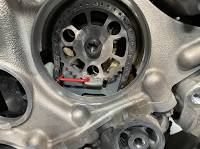
The Problem: What is a “Spun” Crank Hub?
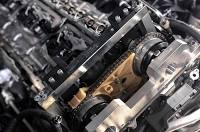
In the S55 engine, the crank hub connects the crankshaft to the timing chain and oil pump. Unlike many engines where this is keyed or pinned, BMW used a friction fit design.
Under high torque loads especially on tuned cars the hub can “slip” or spin.
- Best Case Scenario: The car goes into “Limp Mode” and needs to be retimed.
- Worst Case Scenario: Pistons meet valves, resulting in a $15,000+ replacement bill.
The Symptoms: Watch the Dash
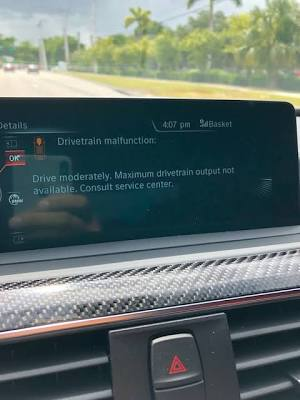
Unfortunately, there is rarely a warning sound. Watch for the Drivetrain Malfunction warning on your iDrive screen.
The Solutions: Bulletproofing Your S55
If you plan on tuning your car, preventative maintenance is essential.
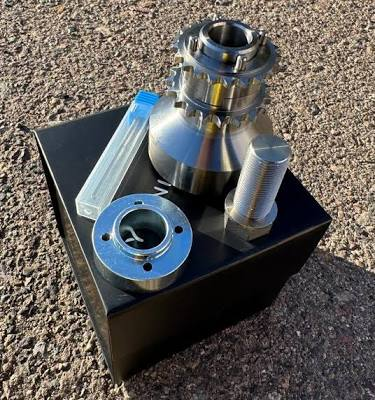
- The Crank Hub Capture: A plate that prevents the hub bolts from backing out. A great safety measure for stock cars.
- The Pinned Crank Hub (Permanent Fix): Drilling into the crankshaft to physically lock the hub in place. Pinned kits are the standard for high-horsepower builds.
- Upgraded Charge Air Cooler: The S55 top mount cooler can leak internally. Upgrading to a high performance unit prevents coolant from entering your intake. The BMW M4 Reliability Bible: Solving the S55 Engine’s Greatest Weaknesses
The BMW M4 is a masterpiece of engineering. With its twin turbocharged S55 inline six, carbon fiber reinforced plastic (CFRP) components, and track tuned suspension, it is arguably the most capable daily driver performance car of the last decade.
However, for owners and enthusiasts, the M4 comes with a set of “mandatory” conversations. From the dreaded Crank Hub slip to intercooler failures, maintaining an M4 requires more than just standard oil changes. This guide breaks down the most critical problems, their symptoms, and the professional-grade solutions to keep your M4 at peak performance.
1. The “Big One”: The S55 Spun Crank Hub
If you spend five minutes on any BMW forum, you will hear about the Crank Hub. Unlike many performance engines that use a “keyed” or “pinned” system to lock the timing gear to the crankshaft, BMW used a friction disk design for the S55.
The Problem:
Under high torque especially during a “kick down” from a dual clutch transmission (DCT) or on cars with Stage 1/Stage 2 tunes the friction disks can fail. This causes the hub to “spin,” instantly throwing the engine’s timing out of sync.
The Consequences:
Minor Slip: The car enters limp mode, and you face a $3,000+ bill to re-time the engine.
Major Slip: The valves hit the pistons. This is “Game Over” for the engine, often resulting in a $15,000 to $20,000 replacement bill.
The Solution:
Crank Hub Capture: A cost effective plate that prevents the center bolt from loosening. Recommended for stock cars as “insurance.”
Pinned Crank Hub: The gold standard. A specialist drills 2 or 4 small holes into the crankshaft to physically lock the hub in place. Once pinned, the hub cannot spin.
2. The Leaking Top-Mount Charge Air Cooler
The M4 uses an air-to-water intercooler sitting right on top of the engine. While efficient for cooling, it has a hidden flaw.
The Problem:
Over time, the internal cooling fins of the OEM cooler can crack due to heat cycles and vibration. Because it is an internal leak, you won’t see a puddle on the ground. Instead, the engine “drinks” the coolant.
The Symptoms:
Unexplained loss of coolant in the small (intercooler) reservoir.
White smoke from the exhaust during hard acceleration.
Potential “hydro locking” of the engine if the leak becomes severe.
The Solution:
Replace the plastic/aluminum factory unit with a high performance billet aluminum Charge Air Cooler. Brands like CSF or Mishimoto offer units that are TIG welded and virtually indestructible compared to the factory part. - Plastic Charge Pipe Failure
BMW used plastic for the pipes connecting the turbochargers to the intercooler. While lightweight, plastic becomes brittle under the high heat of an M4 engine bay.
The Problem:
Under increased boost pressure (common in tuned M4s), the plastic charge pipes often “pop” or crack at the flanges. This results in an immediate loss of boost and a “Drivetrain Malfunction” warning.
The Solution:
Upgrade to Aluminum Charge Pipes. They are a direct bolt-on replacement, will never crack under pressure, and often feature ports for those looking to add Methanol injection later.
4. Maintenance Best Practices for the M4
To avoid the problems above, a proactive maintenance schedule is your best defense:
Oil Changes: Every 5,000 miles. Don’t wait for the BMW-recommended 10,000 mile interval.
Spark Plugs: Every 20,000 to 30,000 miles (more often if tuned).
Differential Service: The M Active Diff is a complex piece of machinery; change the fluid every 30,000 miles to keep the locking mechanism smooth.
Walnut Blasting: Every 50,000 miles. Like all direct injection engines, carbon builds up on the intake valves, robbing you of horsepower.
The Bottom Line
The BMW M4 is one of the greatest driver’s cars ever made. By addressing the crank hub preventatively, you can enjoy the full potential of the S55 engine without fear.
